
Refined Mouse Handling Overview
What is refined mouse handling?
Traditionally, mice are picked up by the base of the tail to remove them from caging during cage changing and for procedures. However, picking mice up by the tail, even for only 2s during cage change, causes negative behavioral and physiological (Ghosal et al. 2015; Gouveia & Hurst 2019) effects. Here we offer evidence that indicates refined handling methods (i.e., tunnel/hut handling or cupping) are beneficial to mouse welfare (Hurst & West 2010; Nakamura & Suzuki 2018; Clarkson et al. 2020) & improves quality of scientific data (Gouveia & Hurst 2017).

Animal Welfare

Scientific Quality

Ease of Handling

Job Satisfaction
How common is refined handling?
Individual research laboratories and entire institutions across the globe are switching their mouse handling practices to replace tail handling methods with refined methods. They say there is a huge difference in the behavior of the mice. And once they switch, they say they’d never go back.
In the United Kingdom, over 60% of institutions use refined handling methods exclusively – no tail handling allowed. In the United States and Canada more and more institutions are making the switch.
So far, we know that Charles River Laboratories, AstraZeneca, Midwestern University, University of Florida, University of Ottawa, Wilfrid Laurier University, University of Kentucky, University of Kansas, ITR Laboratories, LakeHead University, The Centre for Phenogenomics, the Small Animal Laboratory at the Oregon National Primate Research Centre, and Xenon Pharmaceuticals have fully switched. Institutions that are in the process of switching to refined methods include GSK, University of Washington, University of Chicago, and Eli Lilly and Company.
Should your institution be added to one of these lists? Email info@3rc.org to get added!
Tunnel/hut handling vs. cupping
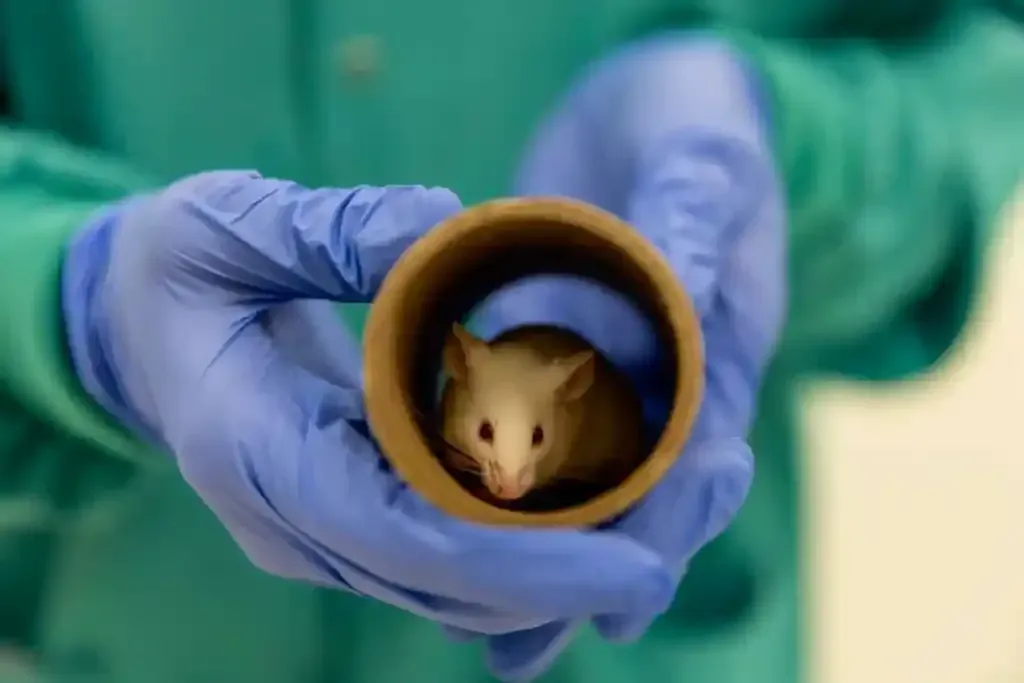
Tunnel handling simply involves guiding mice into a tunnel to pick them up out of their cage. They can then be tipped out of the tube backward and scruffed for procedures, as needed. The benefits of tunnel handling remain even if mice are subsequently given injections, have blood drawn, or undergo gas anesthesia.
Hut handling involves guiding mice into a hut to pick them up out of their cage. The hut can then be placed into a new cage to let the mouse walk out, or be scruffed for procdures, a needed.
Cupping involves picking mice up with cupped hands. It does not require any new equipment but does require a bit more training of mice.
See
How to conduct refined handling for more information on tunnel/hut and cupping methods.
Tunnel handling
Hut handling
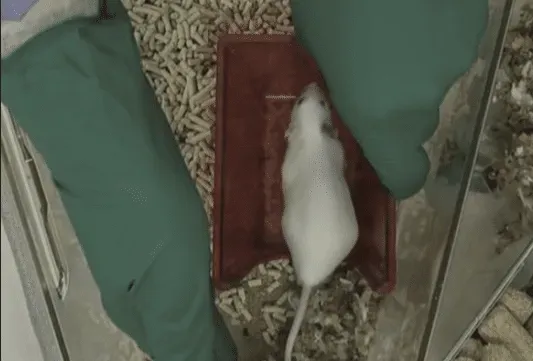
Cupping
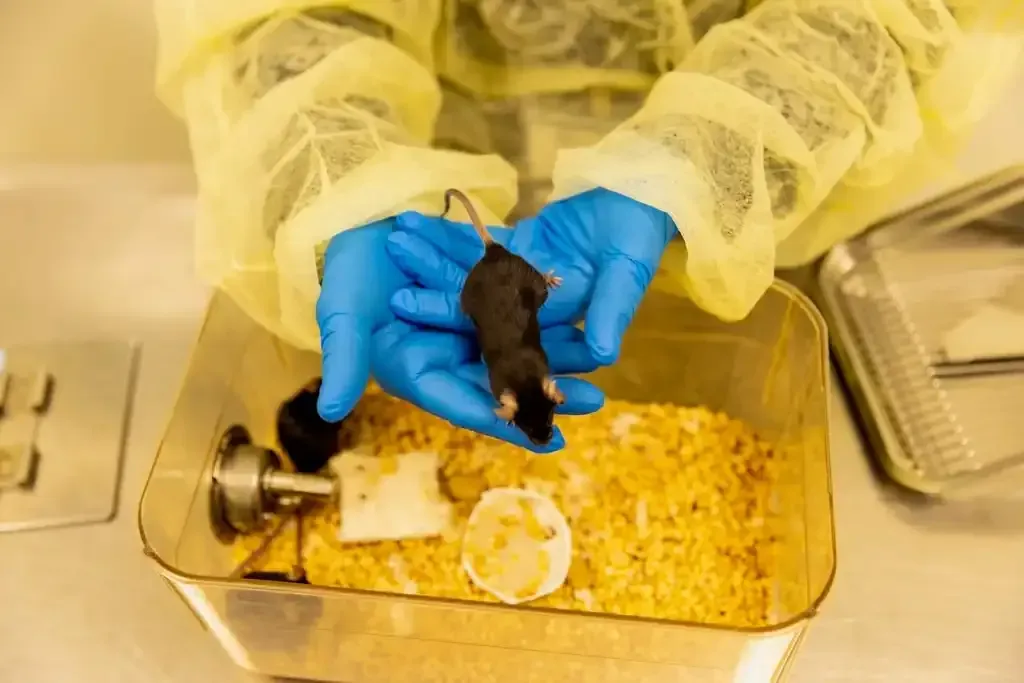
Photo credits to University of Washington (left, right) and University of British Columbia/Maya Bodnar (middle).
What is the evidence that supports the use of refined handling?
There have been over 30 publications supporting the benefits of refined handling improving welfare & scientific quality including:
- Reducing anxiety as measured by elevated plus maze, social novelty test, open field test, and light-dark box test (shown in 10 papers including Hurst & West 2010)
- Reducing depressive-like behavior as measured by sucrose reward, resilience to negative events (Clarkson et al. 2018, 2020), forced swim test and burrowing test (Sensini et al. 2020)
- Reducing chronic stress as measured by adrenal gland size (Clarkson et al. 2020)
- Increasing test reliability (Hurst & West, 2017)
- Improving physiological parameters such as improving glucose tolerance & reducing blood glucose & corticosterone (Ghosal et al. 2015; Ono et al. 2016)
- Increasing voluntary interaction with the handler (shown in 10 papers including Hurst & West 2010)
- Improving breeding as measured by larger pups (0.75g), more pups born (1), weaned (1.5 ), and longer breeding productive lifespan (20%; Hull et al., 2022).
See our
Publications page for more.
Does refined handling take longer?
Once staff and mice are adequately trained, husbandry tasks and experimental procedures typically do not take any longer than with tail handling. For cup handling, typically some habituation for the mice is required initially so it may take longer initially.
- In a time study of four technicians, where tunnels were placed in the home cages two weeks earlier, tunnel handling mice for cage changes was found to be faster than tail handling with forceps on both the first and second cage changes. No training of the mice was needed (Hull et al. 2022).
- In an
additional study, researchers found that using cup handling took less time for cage change than using forceps
(Doerning et al. 2019).
Preliminary data from the second round of our survey on refined handling use allowed us to ask individuals about common concerns to using refined handling and how these factors changed after implementing refined handling.
We found that the majority of respondents (<60%) report that
cage change and handling time decreased, or stayed the same, after switching to refined handling.
Recent data from a study by Arnott et al. (2023) at AMGEN (full poster linked here), found that tunnel handling took less time than tail handling for a number of mouse strains.
The only outlier were Balb/c mice. This is a great example that different strains may need different refined handling techniques. Balb/c have been reported to be easily picked up using cupping. This may also provide an explanation for the potential increase in cage change time/handling in the results shown above.
Making the Switch
For information on how to use refined handling, visit our How to page.
For information on making institution wide change, getting institutional buy-in, and real-life case studies and testimonials, see our
Institutional Change page.