Mouse Refinements
Key Natural Behaviors
- Social structure
- Nesting
- Burrowing
- Climbing
- Foraging
- Nocturnal/crepuscular
- Avoid open spaces
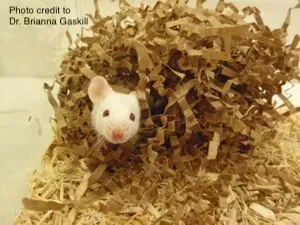
A mouse peeks out of a well-formed nest.
Recommendations
- Stable group housing
- Water/food at one end
- Nesting material – a minimum of 8 grams for 3-5 mice. (Transfer clean & dry nesting material during cage change.)
- Aspen bedding is generally preferable compared to corn cob
- Tubes & climbing structures
- Avoid cages being in the direct path of ultrasound when possible (dripping taps, cart wheels, computers)
- If using individually ventilated cages, monitor for anxiety/discomfort based on high air change rate
- Running wheels
- Gnawing sticks
- Avoid bright light (mice prefer <65 lux) especially covering the top row of cages on a rack
- Grid space, mouse lofts, or mezzanines
- Pick up mice with refined methods such as tunnels, cupping, huts, ladders, etc: See our Rodent Handling page for tips
Resources
- Administration of substances: oral gavage & injections
- Aseptic technique in rodent surgery
- Refined scruffing technique
- NC3Rs Mice Resource
- Comfortable Quarters for Laboratory Animals
- RSPCA/UFAW Rabbit/Rodent Welfare Meeting Reports
- Animal Welfare Institute’s Refinement Database – Mice
Procedural Refinements
Rodent Oral Gavage & Dosing
- Flexible feeding tubes for oral dosing are an animal welfare refinement over rigid metal tubes which have been shown to cause significantly more esophageal inflammation as seen in this study from Bristol Myers Squibb
- . Plastic gavage needles (seen here) are flexible to reduce the risk of trauma to the esophagus, translucent to visualize delivery, and disposable to eliminate the cost of cleaning and the chance of compound crossover
- Micropipette-guided Drug Administration can be used instead of gavage. Mice can be trained to drink medicated fluids which can remove the need for oral gavage from the study (video here)
2. Rodent Blood Sampling
- Vascular Access Buttons™ are the preferred method of catheter exteriorization for mice (one or two catheters) and rats (one to four catheters). They offer many advantages such as low-stress and hands-off sampling and infusion, the possibility of group housing after surgery, and extended catheter patency duration. The Vascular Access Button™ has been used for many applications aside from blood sampling and infusion including bile duct collection, organ or subcutaneous infusion, glucose clamping, and has been used successfully with ferrets, rabbits, mini-pigs, and other small rodents
- Provides a way to group house the animals, reduce their stress, and improve data
- If a chronic study requires access to the vascular system and the catheter patency is suboptimal, more animals will unnecessarily need to undergo surgery and be enrolled